Showing posts with label Howard. Show all posts

Saturday, December 9, 2023

"Abyss" Piece Is Another Shanashambles


There is something badly wrong with the op ed sector of the Australian media.  Many outlets continue to pay for articles that are factually shoddy and that reinforce the prejudices of partisan readers rather than helping their readers to actually understand politics.  It's perhaps a vicious cycle in which some outlets think there is no market for anything better than an echo chamber, and by offering a bad product ensure they'll never find out otherwise.

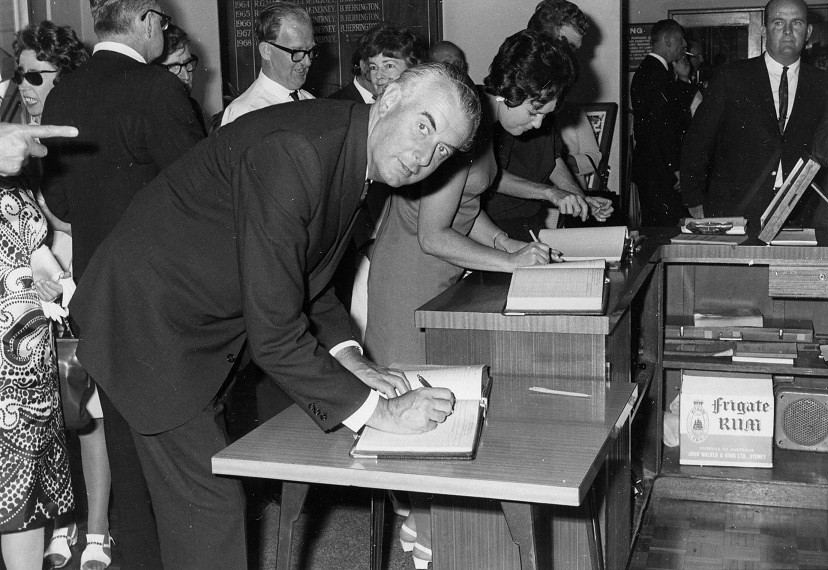
The latest hopeless offering by Dennis Shanahan (screenshot above) is an example.  To be clear, nobody should deny that the Albanese Government has been shedding public support rapidly in recent months. Anyone in Labor's support base who is not at least a little bit concerned about this is a fool. 

Monday, August 9, 2021

Poll Roundup: Lockdowns And Rollout Problems End Morrison's Net Rating Streak

It's been a while since my last federal polling roundup and in that time the government's troubled vaccine rollout and the challenges polled by the Delta strain of COVID-19 seem to have put paid to government optimism about rushing off to an early election this spring.  Indeed, recent weeks have seen the government record its worst 2PP polling of the term so far, though by historic standards it is not yet in severe poll-based trouble.  

Voting Intention

Three weeks ago, four polls came out in quick succession:

* A Newspoll Coalition 39 Labor 39 Greens 10 One Nation 3 Others 9.  The published 2PP was 53-47 to Labor but Labor probably got lucky on the rounding here.  The average last-election 2PP for these primaries would be 52.5-47.5, and indeed when exactly the same primaries came out in early March, the 2PP was 52-48.  Given that this one rounded to 53, it must have been at least 52.5 prior to rounding.

* Essential Coalition 37 Labor 36 Greens 10 One Nation 4 Others 6.  After rescaling to remove undecided and get sum to 100, Coalition 39.8 Labor 38.7 Greens 10.8 One Nation 4.3 Others 6.5.  The published 2PP is 47-45 (=51-49) to Labor under Essential's 2PP Plus method using (mostly) respondent preferences, but by last-election preferences I get 52.1 to Labor.  

* Resolve Political Monitor Coalition 38 Labor 35 Greens 12 One Nation 4 "Independents" 7 Others 5.  Resolve does not publish a 2PP.  By last-election preferences these numbers come to about 52.0 to Labor if taken as published, but Resolve overestimates independents.

* Roy Morgan Coalition 39 Labor 37 Greens 11.5 One Nation 3 Others 9.5.  Morgan's published 2PP was 52.5 (respondent preferences); I get 52.0 (last election).  

In the last week two fresher polls have arrived:

* Another Newspoll with a 53-47 2PP to Labor, but this time with the Greens on 11 and Others on 8, which all else being equal suggests the 2PP this time was probably close to 53 prior to rounding.

* A Morgan with a 53.5% 2PP to Labor off primaries of Coalition 37 Labor 37 Green 12.5 One Nation 3 others 10.5.  I get 53.3 (last election).  This is the highest 2PP poll for Labor of the term except for some bushfire-era Morgans for which only 2PPs were back-released. 

Tuesday, March 2, 2021

The Howard Aggregation 1993-1996

In 2018, on the 25th anniversary of the Paul Keating's famous and unusual 1993 election victory, I released The Keating Aggregation, an account of the well-known polling downs and lesser-known polling ups of the Hawke-Keating government on its way to that celebrated victory.  

Today, it is 25 years since the Keating Government was turfed by the Liberal-National Coalition led by a second-time Opposition Leader, John Howard.  And to mark the 25th anniversary of that occasion too, today I present a polling aggregation for the years 1993-1996.  Together with the above Keating piece, this means that 2PP aggregations for all the terms from 1990 onwards are now available online; other historic aggregations are available at Poll Bludger.  Incidentally, aggregation itself existed in the early 90s, and while looking for missing poll data I found old newspaper articles by Brian Costar that used 2PP aggregation to estimate election results.  What I haven't found yet from that time are any aggregation graphs.  

Sunday, February 7, 2021

How Much Does A Home State Federal Leader Matter In That State?

This piece came about, indirectly, because the Courier-Mail was printing silly sentences again.  A piece commenced with the following lines:

"Kevin Rudd has refused to reveal whether under-pressure Opposition Leader Anthony Albanese can win Queensland despite the former Prime Minister joining him for day one of a whirlwind ‘jobs tour’ across the state. 

[..] 

Mr Albanese was joined by Mr Rudd on the pre-campaign hustings at Southbank – however the former Prime Minister declined to comment when asked by The Sunday-Mail about how or whether Labor could win the state."

Rudd claims he declined to comment because it was the Courier-Mail rather than because of the question.  Whatever the facts in that regard, two things stood out to me in the opening line. Firstly there's the idea that the former Prime Minister is a divine revelator who can exclusively "reveal" facts  about the prospects of Opposition Leaders in his state.  Secondly, the idea that winning Queensland is a realistic or relevant goal for an Albanese-led ALP.  After all, Labor currently needs an enormous 8.44% swing to win the 2PP in Queensland, and has only won the Queensland 2PP three times since the Second World War - 1961, 1990 and 2007, all of them by a whisker

Tuesday, September 15, 2020

Age And Canberra Are Still Killing State Governments

 Advance Summary

1. One of the most important factors in state election outcomes is the influence of whether the governing party at state level is in Government or Opposition federally.  To be the same party as the federal Government is a disadvantage.

2. Another important factor is the age of the state government, with governments tending to do worse the longer they have been in office.  

3. In the last six years, all same-party state governments that have faced elections have lost seats in significant numbers.

4. In the meantime, two of the three opposite-party governments gained seats (though one very old opposite-party government was defeated, but with a 2PP swing to it.)

4. It might seem logical that if the federal government at one state election was the same as at the previous election for that state, then this factor would not generate further swings against an incumbent state government of the same party, or further protection for one of the opposite party.

5. However, the evidence suggests otherwise.  It appears that more voters continue turning against state governments that are of the same party as the federal government, over successive elections, even when the same federal government had been in office at the state election before.

Sunday, April 5, 2020

Morrison Breaks Two Newspoll Records Amid Coronavirus Crisis

The Newspoll just released deserves a special post in the absence of other polling, because of a couple of historic bounces for incumbent Prime Minister Scott Morrison.  It should be stated from the outset that these records have fallen partly because Morrison was coming off a low base.

To give the numbers first, the government now leads 51-49 two-party preferred, a gain of two points from three weeks ago.  The primaries are Coalition 42 (+2) Labor 34 (-2) Greens 13 (+1) One Nation 5 (+1) Others 6 (-2).  (I have a concern that the new Newspoll methods may be overestimating the Greens' vote by naming only them and the majors on the initial screen).  Scott Morrison leads Anthony Albanese 53-29 as "better Prime Minister", up from 42-38 last time, noting that Better PM is an indicator that tends to skew to incumbent PMs all else being equal (so 42-38 was actually a bad result for Morrison).  Morrison has a net satisfaction rating of +26 (61 satisfied 35 dissatisfied), up 38 points from -12 (41-53) last time.  Albanese has a net satisfaction rating of +9 (45-36), up 9 points.

What is notable overall here is that the government has only registered a modest bounce on voting intention but perceptions of Morrison's leadership have been changed dramatically by the crisis. This is indicative of a bipartisan mood where many voters are willing to say that although they support an opposition party, the government leader is doing a good job with this crisis.  (One can hear similar from Victorian Liberal voters regarding Daniel Andrews.)

Sunday, January 27, 2019

Government Retirements Are At Nowhere Near Record Levels ... Yet!

Advance Summary

1. There are widespread claims that the number of Coalition MPs announcing their retirement prior to the 2019 election is at a record high and that this is a predictor of a crushing loss.

2. Although both these things may well later become true, for the time being such claims are premature.  Larger numbers of government MPs have retired at most recent elections than have so far announced their retirements for 2019.

3. Historically there is a very strong relationship between the rate of government retirements (from both houses) and election outcomes in the House of Representatives.

4. The relationship between Opposition retirement rates and election outcomes has been weak if it exists at all, although a very low retirement rate was recorded by the winning Howard Coalition opposition in 1996.

5. While retirements can make it more difficult to hold seats, the historic pattern is most likely explained by government MPs retiring in expectation of defeat, or retiring as a result of factors (such as leadership ructions) that are likely to contribute to poor results.

Sunday, August 26, 2018

Australia - So What The Bloody Hell Was That?

For the fourth term in a row, the Australian Prime Minister following the previous election has failed to survive the term without being removed by their own party.  This is quite a streak given that in the previous 41 terms only two PMs have been deposed in the same way.   However this week's removal of Malcolm Turnbull has had a novel outcome, with the PM replaced not by his initial challenger Peter Dutton, but by a supporter, Scott Morrison.

Among the many takes that I think needs more careful analysis is the claim that Dutton failed to become Prime Minister just because that side of his coup attempt was tactically botched.  For sure, the Dutton camp frequently seemed to have a bad grasp of both numbers and tactics, whinged when faced with a reasonable request to prove support for another meeting so soon after the first, and were not helped by their man's recycled 17-year-old ALP thought-bubble of removing the GST from electricity.  Dutton's erratic demeanour didn't help either.  But I think there has been too much attention on how badly the Dutton plotters played their hand and too little on it being a weak hand to begin with.  It was a weak hand on two fronts: parliamentary stability and potential electoral impact.  

Saturday, April 28, 2018

Not-A-Poll: Worst PM Of The Last 45 Years

It's a little bit later than I intended but I've now found time to kick off the Worst PM Not-A-Poll as a sequel to the Best PM series that I ran for several months.  Voting in the sidebar, below the Prosser Not-A-Poll.  The first round will run until the end of May.  The rules are:

* this is intended as a shorter exercise than Best PM, so if there is not an outright majority in round 1 there will be a runoff between the top two only.

* in the case of a tie to get into the runoff, the PM who left office first will progress to the runoff.

* in the case of a tie in the runoff, the PM who received the most votes in round 1 will be deemed Worst PM.  If the two tied in round 1 as well they will be deemed equal worst.

* in the event of obvious or highly likely stacking by a single person I will deduct votes and declare changed results as I deem necessary - any changes will be logged as soon as I decide them.

* Gough Whitlam is not included as he won immunity by winning the Best PM Not-A-Poll series.

I do ask that people vote honestly.  It's common for supporters of political parties to automatically demonise the current PM while their party is in opposition, or the most recent PMs of the other side while their party is in government.  That said, you might honestly think the person that line of attack implies is the worst, and if that's the case, go for it.  (And no, this site doesn't make or break careers at federal level at least, so please don't vote for anyone on that basis.)

Worst PM will be followed by Worst Opposition Leader.

Sunday, December 31, 2017

Best Prime Minister Of The Past 45 Years: Round 5

File:Whitlam Lingiari Image 3.jpg
(image source, licence)
"A conservative government survives essentially by dampening expectations and subduing hopes. Conservatism is basically pessimistic, reformism is basically optimistic."

Excluded: John Howard (13.9%)

I chose this particular quote from the primary vote leader of round 4 of my multi-month best PM Not-A-Poll as a send-off by said leader to the last eliminated Liberal contestant.  Given the left-wing bias of this site's readership and consumers of psephology in general, Howard has actually done pretty well to make it this far, but overachieved by somehow edging out Bob Hawke in round 3, and his elimination in this round always looked extremely likely.  

Thursday, November 30, 2017

Not-A-Poll: Best Prime Minister Of The Last 45 Years, Round 4

Image result for gough whitlam image
(Image: Flickr:Gostalgia licence)

"The main sufferers in Australian society — the main victims of social deprivation and restricted opportunity - have been the oldest Australians on the one hand and the newest Australians on the other. " 

Three months ago, I started a multi-round Not-A-Poll to determine this site's choice for the title of Best Prime Minister of the Last 45 Years.  Each round, one Prime Minister (sometimes more) is given the boot until someone gets over 50% and wins.  Each round runs for about a month, so you can vote for different candidates from month to month if you want to.  Multiple voting is in theory banned, but still readily possible at low levels; adjustments may be made if required.  It is what it is, but at least it's preferential in a way, unlike, say, Australian bird of the year.

The winner of each round gets a photo and a quote on the top, except for the final round when photos of both candidates will go up together.  And there is an obscure rule that if there is a new Prime Minister voting stops for a month to give the new PM time to establish themselves as incredibly brilliant and win the contest. I mention that because there's chatter about that the incumbent (eliminated in last place in this contest with a ridiculously small vote) might not even last the coming sitting week.

Wednesday, November 1, 2017

Not-A-Poll: Best Prime Minister Of The Last 45 Years: Round 3

Image result for gough

"The Honourable Leader of the Opposition, Sir Billy Snedden, has broken his promise: the promise he made to me before the election. He promised not to tell any lies about me, if I didn't tell the truth about him."*


Two months ago I started a multi-round Not-A-Poll to determine this site's visitors' choice for the title of Best Prime Minister of the Last 45 Years.  The idea is that each month the Prime Minister in last place is eliminated and the rest continue until someone gets over 50% and wins.  There are rules permitting multiple exclusions in certain cases, to speed up the process a bit.  Each round runs for a month, so you can vote for different candidates from round to round if you want to. Multiple voting is in theory banned and adjustments may be made if I detect it, but there will probably be a lot of low-level multiple voting I can't detect or prevent. Comments about the merits of the contestants are welcome.

Saturday, September 30, 2017

Not-A-Poll: Best Prime Minister Of The Last 45 Years - Round 2

PRIMARY VOTE LEADER FROM ROUND 1: Whitlam
EXCLUDED IN ROUND 1: Turnbull, Fraser
Rudd continues only because of irregular voting patterns for Abbott

Round 2 voting open in sidebar til 6 pm AEDST, 31 October

A month ago I started a multi-round Not-A-Poll to determine this site's visitors' choice for the title of Best Prime Minister of the Last 45 Years.  The idea is that each month the Prime Minister in last place is eliminated and the rest continue until someone gets over 50% and wins.  There are rules permitting multiple exclusions in certain cases, to speed up the process a bit.  Each round runs for a month, so you can vote for different candidates from round to round if you want to. Multiple voting is in theory banned and adjustments may be made if I detect it, but there will probably be a lot of low-level multiple voting I can't detect or prevent. Comments about the merits of the contestants are welcome.

Technical note: If you wish to vote on a mobile, switch to "View web version" at the bottom of an article.

Thursday, August 31, 2017

Not-A-Poll: Best Prime Minister Of The Last 45 Years

(Round 1 has closed.  For results see Round 2.)

Round 1

Now and then we see newspaper polls rating the best PMs of the last few decades, or in the case of one Essential poll last week, the best government of the last ten years.  John Howard is a persistent "winner" of the first class of polling, but I've always believed he has an unfair advantage.  He tends to get a very high share of the Liberal vote with other Liberal PMs hardly getting any, while the Labor vote tends to be split up more between Hawke, Keating, Whitlam, Rudd and Gillard.  For that reason it's not clear whether Howard would beat all the Labor PMs on a head-to-head basis, although it looks like he probably would.

I've decided to run a similar Not-A-Poll exercise here in the sidebar just for fun over a period of several months.  The basic rule is that we keep going eliminating one PM at a time (perhaps more) until someone has over 50% at the end of a month.  The more complicated rules are:

Wednesday, January 13, 2016

What Scientists Do: More On That Penalty Rates Poll

In Monday's Crikey subscriber email, Ben Oquist of The Australia Institute (paywalled) took issue with some comments I made about TAI's recent polling in a piece entitled Polling And Penalty Rates.  While I could have just added my reply as an update to the original article, some of Oquist's comments are too cheeky by half - in a way that typifies the general rottenness of commissioned-poll-spruiking in Australia - and I think that dealing with these issues deserves a fresh article.  Peter Brent has also replied and my reply is quite similar.

Oquist's comments concern objections I raised about the use of forced-answer methods in an issue poll conducted by robopolling rather than allowing a don't-know option.   That said, of the two statements he says that I "confidently state", one (“a ‘don’t know’ option would certainly have changed the numbers considerably’’.) was in fact stated by Brent!

It is true that my initial response (on Twitter) that most voters who went for the "stay the same" option would actually have no opinion was overconfident and probably incorrect, but I'd already said that in my article which Oquist links to, so here Oquist is flogging a horse that has already run away, which must be convenient for him. Oh, except that anyone with enough attention span to read my article that he links to will see that this is so!  The problem remains that some substantial number of respondents would have had no actual view, and that these were forced to give an answer (or hang up) and then claimed (by TAI) as supporters of the existing system.  I add that when questions like this have an available "meh!" option ("stay the same"), it is likely some voters would take it when they really had no clue, even with an undecided option included.